
Alex Amen has two more albums waiting.
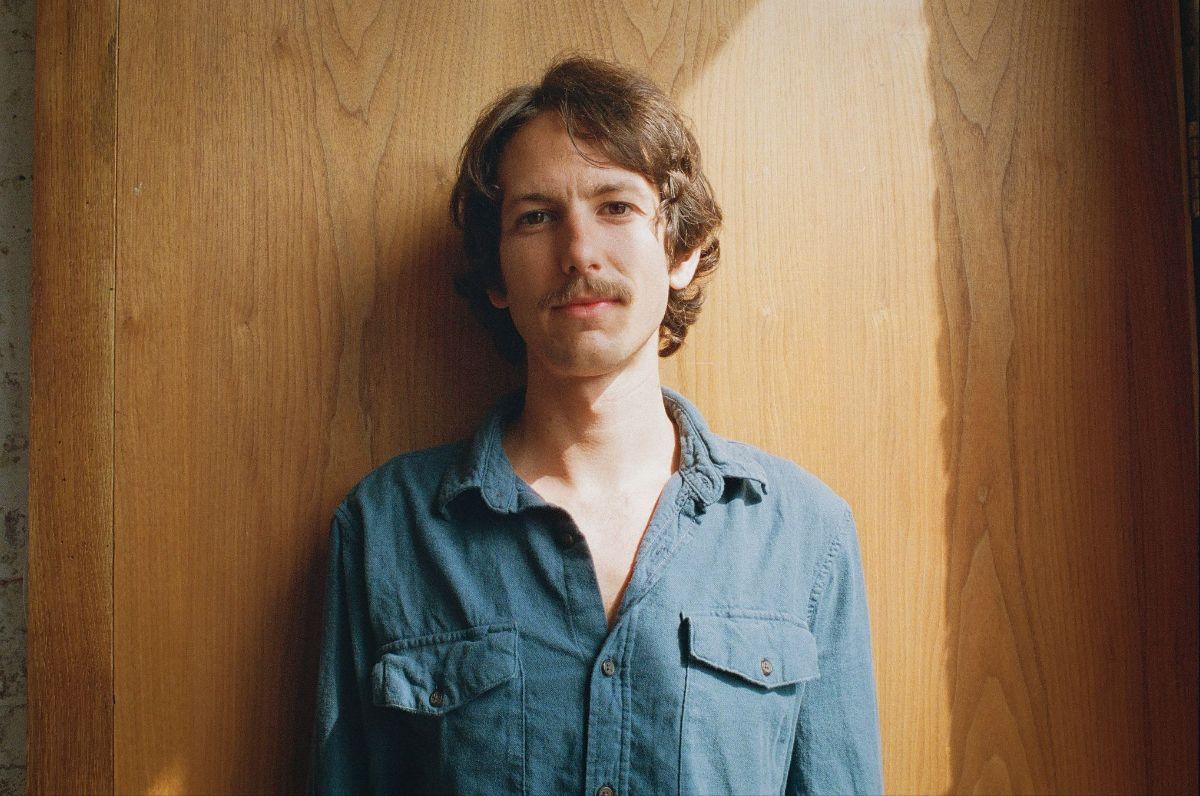
The 26-year-old singer-songwriter released his debut full-length, Sun of Amen, on June 12 via ATO Records. The record arrived after a self-produced EP (The Zorthian Tapes), a publishing deal with Rick Rubin's American Songs, and a wandering decade that's taken him from a Southern California commune to a remote Washington island to a recent home in Brooklyn. Festival sets at Pitchfork, Newport Folk, Austin City Limits, and Willie Nelson's Luck Reunion opened up before he'd even put out a full-length LP.
Produced by Amen and engineered by Jonny Bell at the legendary Valentine Recording Studios in L.A., Sun of Amen lands as a quietly defiant entry into an attention economy that Amen refuses to play along with. We caught up with him about that refusal and what release looks like without a viral moment behind it.
Analogue: Where are you these days? Your own bio talks about being all over the place, so I'm curious where you've landed for now.
Alex Amen: When I'm not on tour, I'm in Brooklyn. That's where I'm based, and I've been here since January, so four or five months now.
Analogue: What's the longest you've ever been in any single place?
Alex: Growing up, I lived in Texas in the same house from when I was born to when I left for college, so that was the longest in my life. In total, if you add up the two different times I lived there, California would be the longest, about four-and-a-half to five years. And then I lived in Washington for three and a half years. So, almost a decade on the West Coast.
Analogue: So not so nomadic that you can't establish some roots.
Alex: Definitely. The roots I made were more so with the people than anything. I think I moved eight times in seven years or something. It was always just packing up and off to the next spot or next house. But the people, they stay around. That's more so what has remained constant.
"Usually, when there's something happening that's bullshit, there is usually space to either speak out against it or to find an interesting way to create a counterculture to that thing."
Analogue: You've leaned into this organic path that includes your creative life, but now there's industry momentum behind your music, and that comes with a specific way of doing things. How does that intersection feel? Do things feel congruent with how you like them, or are you having to wrestle with some things?
Alex: It's a blend of both feelings. This side of things—doing actual interviews, going out to promote music through playing music—that side is awesome. I love it because, to me, that's the human element of it. The side I don't like at all is the social media side. That side is terrible, actually. It's something I think is the downfall of the modern music era.
It's hard because so many people I know who are successful gain that success through the internet. The pedal steel player who plays in my band is great on social media. Through his social media of him playing—he's an amazing player, definitely one of those players where it's like a gift, beyond a normal person—and he's good at social media. From that, now he plays with Lana Del Rey, now he's getting asked to play with the Dixie Chicks, big acts, stadium tours, and stuff. That comes from social media. Some friends I know play in this kid Malcolm Todd's band, and he blew up on TikTok. He's this giant pop star guy. I'm surrounded by a world of people who have what you would call hyper-success that comes from using or exploiting social media.
And I'm also surrounded by people within the industry—across the spectrum, from pop to indie to the art side of music—who use certain types of marketing platforms that manipulate social media. They manipulate the perception of how relevant something is. That overall perception of things is terrible.
What I don't like about it is not the fact that people are doing it, because I understand why they're doing it. It's almost like a hamster wheel that everyone's running on. Now everybody's running. The people next to you are running, and it's like, are you going to start running, or are you just going to get sucked up into the wheel and spit out?
Analogue: Did that come into play when you decided to release music in the first place?
Alex: That's the thing that feels weird, because when I decided to do music as a career, I was living in Washington. I had been in a relationship for a very long time. The person I was with owned a house. I had a whole track in front of me to just become a teacher, or start a business, to live in the woods and grow my own food and be in love. And I remember having the feeling that I had to do music. I was going to be miserable if I didn't do it.
So when I put all my focus behind it—okay, if I'm going to do music, I need to have a music career, because all I want to do is play music—I did the thing where I worked as a valet and worked at restaurants. It took so much energy away that I knew that wasn't the way I was going to do it. When I moved to L.A. and made that Zorthian EP, I knew a couple of tracks on it I thought were pretty good. I was around all these kids who were using social media and having so much success from it, so I started to use it. From using it, I built up enough of a little following that I landed a good publishing deal with Rick Rubin.
From all of that, I started having all these meetings with labels and started to look behind the scenes of how sausages were made. I started to realize very quickly that the reason we know certain names so well and don't know their songs at all or care about their songs is because there are millions and millions of dollars behind these artists to make it so that you're aware of them. I didn't wind up signing with any of these major labels, but I got very far along in the process with a handful of them—multiple meetings, having dinner with the president of these companies, really getting in the weeds contractually. It just never panned out, didn't feel right.
So I wound up signing later on with the independent label I'm with now, ATO Records, which has put out and broken some of my favorite artists of modern times. That was one of the big reasons I signed with them—their track history and who they've worked with, but also because there was this approach of realness. Like, we're not going to do certain things that are a little bit scandalous in terms of this way of marketing.
But at the same time, the music industry is an industry, and the economics are set up in the world—especially where we live—where industry goes hand in hand with competition. Competition is basically a sport. And if you're competing in a marketplace with all these other people, certain people are kind of playing dirty. It's like trying to compete clean when people are using steroids.
So to wrap it all up, it's trying to figure out how to not get spit out on that hamster wheel. Meanwhile, you have a lot of acts who have companies posting 2,000 videos in a day, thousands of dollars behind seeding views and seeding fake comments. When you're thinking about that, it's definitely disheartening. But I see an opportunity, because a lot of people are fed up with it. Usually, when there's something happening that's bullshit, there is usually space to either speak out against it or to find an interesting way to create a counterculture to that thing.
Analogue: Do you feel like your music is succeeding in that way—that people are finding it organically?
Alex: I definitely think so. Barring the fact that I haven't had some gigantic viral moment, and I've never had marketing campaigns behind spending tens of thousands of dollars on seeding views and streams, things are pretty good in terms of being completely organic. That probably comes from the fact that people feel that from either the music or just the approach of it.
Right now, it's already way more than anything leading up, because now I'm signed with a label. I'm not a fully independent artist anymore. There are people helping me with PR and marketing. But it's still through an independent label, and it's so music-focused that, to circle back to your question, that side of it doesn't feel weird at all. I like that side of the industry, actually. It's more so the side where reality is being altered by money that I don't like.
Analogue: You seem like the kind of artist who would relish the ability to have the full-length exhale out there.
Alex: A hundred percent. I've always loved records. Ninety-five percent of the time that I listen to music, I listen to a record. I don't listen to playlists. I'll listen to playlists if I'm at a social thing, but I'm much more of an album listener, so for me to make an album is just the way I think about music.
Analogue: Are you pretty prolific? Is there usually a lot on the cutting room floor?
Alex: This record's done and coming out, and I have two other records that I'm working on right now.
Analogue: Two others?
Alex: Yeah. One's with my electric band—same band, but when we play electric, it's very different, more experimental. And then I have another record that's the follow-up for this one in terms of the sonics and the feel. I have a pretty good idea about what's going to go on that one.
Analogue: Is writing a daily discipline for you, or are you naturally motivated to go to that well pretty often?
Alex: There are seasons of discipline in my life. There are times when it's too busy doing other things—playing shows, recording—that you just don't have the time or space to write. For me, the discipline has always more so been learning other songs, or learning solos or chord progressions. How does the piano go on this record? How's the acoustic guitar on this record? It's learning a lot of those ideas and then having it simmer in your subconscious. Then sometimes I'll sit down and play freely, and maybe I'll have a melodic idea, or I'll be thinking about something I read, and then a song. Songs are very mysterious in that way.
Once the idea comes, that's when the discipline has to come out, because sometimes a song will write itself. But a lot of times you'll get an idea—a first verse or something—and then you have to chisel it out, like sculpting marble or ice sculpting. Sometimes that can take a long time, days to weeks if it's a stubborn song.
Analogue: What song on the new album came the easiest?
Alex: A handful of them came all at once. The one that's probably the easiest, because it's the oldest, and I can't even remember, is "California Blues". I wrote it when I was 14 or 15, and I had never lived in California. I love that song. It has a strong chorus in it. That one came the easiest because I didn't even know it was happening when I was writing it.
Certain other songs on the record, like "Peaches", were all-at-once kind of songs. And then other songs, like the opening song that's out now, "Diamonds", or "Memories of You", those took a little bit longer. "Diamonds", in particular, for whatever reason, took me a while to figure out.
Analogue: Is it a challenge to figure out which ones to keep laboring on and which ones to let go?
Alex: On my end, I kind of can recognize when a song is better than others. But sometimes it surprises you. Sometimes I go through my voice memos or old demo recordings and I listen to something I thought was not good at all, and I'm like, Wow, this is way better than I thought. And sometimes it's the opposite. You have a song you thought was great, you give it space, you go back and listen, and you're like, Oh, I'm throwing that away. It's all subjective.
VISIT: Alex Amen
