
Amy Speace calls it the stupidest financial decision she ever made.
Little made sense, on paper, about a folk singer in her 50s with a young child and a touring lifestyle pivoting to chase an MFA—and specifically to study a form that pays nothing. Speace did it anyway, and she says it's made all the difference.
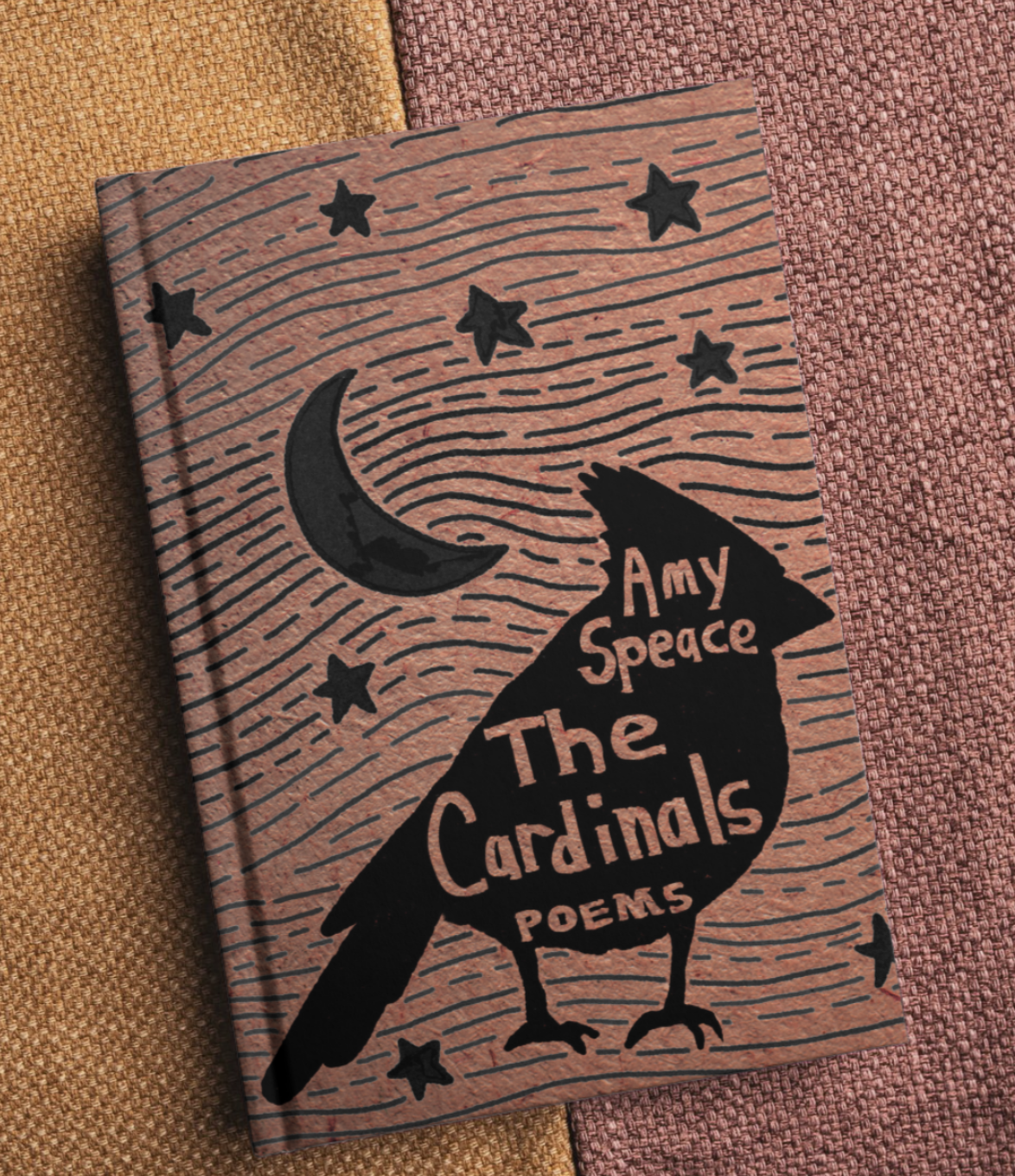
Speace is an award-winning Americana singer and songwriter with her poetry debut on deck. The Cardinals arrives September 1 (Red Hen Press), followed by an accompanying single "Days of Letting Go" on September 4. Both anchor "The Cardinals: Songs, Stories & Poetry," an all-encompassing tour beginning August 27 in Columbus, OH and running into 2027.
The collection is a lyrical investigation of marriage and divorce, mothering and mysticism, and that stupid financial decision turned out to be the very thing that carried her through the hardest stretch of her life. In our latest interview, Speace takes us through her core fears and hopes as she expands her creative reach into new terrain.
Analogue: How much writing, or even just flirtation with poetry, were you doing before?
Amy Speace: When I was a kid, poetry was my jam. I didn't write a song until I was 25. I was a piano player from three, and then a real not-for-prodigy, but music came easy. So I picked up clarinet, I picked up saxophone, I was always in the choir. It defined me. Music defined me. But I didn't create it. I started writing songs at 25, after a bad breakup with a boyfriend who was recording with a band with Paul Kolderie, and we were following the grunge movement around in Boston. And I wrote like 10 songs. Once I found songwriting, I kind of let go of poetry. But every once in a while I'd write some.
So I didn't consider myself a poet. I actually applied to grad school for creative nonfiction, because I had written this memoir called Menopausal Mommy, about having a baby at 50 and going through all this. And I padded my application with a couple poems. And I got a call saying, 'Hmm, you're a poet. Come on over to the dark side.' And it was honestly my life's dream. But I was like, 'Who says they want to be a poet? That's so arrogant.' And I hadn't been in a daily practice of poetry. So I didn't consider myself... at 50, how do you call yourself a poet, when you've got 10 poems to your name that are past age 20? And then once I got there and started studying, I write poetry all the time now. So I realized it was just being transferred someplace else.
Analogue: Can you tell me if there's a before and after to songcraft for you after this process?
Amy: Ah, hmm. It's really interesting. Not really. [Pause] Maybe. Yeah, not really. It's a very different craft. And it's very different for me, since I can only speak from my experience. It's a very different internal journey through language. With songcraft, I'm doing the exact same thing I've always been doing. It's funny that the poetry is informed by the songwriting, but I wouldn't say the songwriting is informed by the poetry study, because the songwriting already had all of the poetic elements that I would want, without it becoming too super obscure.
With poetry, I'll do things like—I always try to use one word in a poem that I don't know. So I have to deep dive the thesaurus to find a word I've never heard of that means exactly the right thing, that has all of the alliterative elements that work in the senses. Whereas I would never do that in songwriting. Because it's an oral art. You get one take, the listener gets the two and a half, three minutes; they're not going, 'Wow, she did this with that.'
To me it's like, 'Does the melody arc support the lyric journey?' And I kind of already had that in place, which is why I never really was interested in going for a master's in songwriting. Not that I couldn't; I'm always trying to be a better songwriter. But being a better songwriter, I already know the craft. Now the journey is: let me figure out what Paul Simon did with that bridge, then I can... that's how you master it.
Whereas with poetry, I knew nothing; I was under-read, I didn't know the form, I didn't know the history. And I needed mentors. I live in Nashville; my mentors are like Mary Gauthier, Grammy Award-winning, great songwriters from the golden era of songwriting, like John Vezner and Don Henry. And Beth Nielsen Chapman. Those guys are the ones that said, 'Come with me.' And then I'll share with them my new songs. And they'll go, 'What if you do this?' And then I'm like, 'Oh, that's how you do it.'
Analogue: I want to go back to something you said about the MFA application. You went from creative nonfiction. I don't want to speak for you, but a core fear or tension for any artist is that pretender feeling, like, 'Am I really allowed to fit in this place I'd like to fit?' I'm curious about returning to that feeling with you becoming a poet in a public-facing way.
Amy: Oh, dear God, I'm terrified.
Analogue: Okay, I wondered about that.
Amy: Core fear, core fear, core fear for me. I mean, isn't it for everybody? Of course. Oh my gosh, I'm 58. I'm terrified. Always. I mean... I'm not anymore; that's not true. I've been through my biggest fear. A friend of mine likened it yesterday in an AA meeting to the rickety, highest roller coaster that you get on that you know is just gonna fall apart. And you're terrified. And you go down it, and you're like, 'That was the most fun thing I've ever done.' And that's kind of what life is like for me. Like, man, you get on your knees with a bottle of Ambien and a picture of your son, and you're seven years sober. It doesn't get darker than that. So I did that. And I also got sober. I did that.
"It was honestly my life's dream. But I was like, 'Who says they want to be a poet? That's so arrogant.'"
So the fear of speaking poetry in public and not being embraced by the poetry community, because I'm poetry lite‚ I feel like I can walk through that. Although not to diminish the fact that, sure, I'm afraid. I feel really confident about my abilities to perform my music. And I'm a storyteller in my show. So everyone's like, 'It's gonna be cake for you.' And I'm like, 'You have no idea how terrified I am of being the poet voice that sounds like this [imitates highbrow voice] as you read your book.'
But then I'm really interested in how the African American community slam-performs. And one of my mentors is a poet from California, Douglas Manuel, and he performs his poetry. He's got jazz and soul in his poetry. But I mean, I'm a blonde white girl from the middle. So I'm trying to figure out what my style is before I get on the road with this stuff. My fear is: I know I'll be embraced by the music community, because the people coming to my events are, for the most part, longtime fans, but I really want to get to know and be mentored by the poetry world. And so I've gone to some of those events, and I'm just stunned by the ferocity of their gifts and their vocabulary and their way of speaking about their work. So different than the music world.
So yeah, core fear. And I'm just going to practice. I'm going to figure out how it's best for me to embody the poem without actor-ing it. We all walk around with these core little-girl fears. Is it a fear of not being accepted? Is it a fear of not belonging? Is it a fear of death? And so I can walk through it. Okay, what if I get up on stage? I really want to study standup comedy, take a standup comedy class. Because talk about core fear. The worst kind of performance. Let me do five minutes on stage and bomb. Okay, everyone's laughing at me. And they're throwing stuff at me. And I'm naked, metaphorically, on stage crying. I crapped in my pants—all of the worst stuff has happened in public. And I'm still alive. How bad can it be? It's freaking poetry. It's a poetry reading. I'm not gonna die. I'm not going to war.
Analogue: When you're crafting in a new lane, how much are you thinking about what to do with it? Because I'm assuming that's such a part of the musical part of you—like, I know if I'm writing a song, it's going to go somewhere, I know how to package it. In this new lane, do you think about the careerism of it, how it's in your ecosystem, as it's coming forth?
Amy: That's the question. Okay, so when I'm in the crafting of something, none of that comes into play. When I'm crafting it, I'm just in a complete mode of, let me just write this the best I can write it, and then I kind of walk with it through the world. I'll sit with it. I'll play it for some friends; maybe I'll play it out. And then I get to the point—in music, I get to the point like, 'Okay, it's been about a year since I put a record out.' The logistics of where I come from is that I'm making a living from shows, right? At shows I get the money from the ticket, but I also sell the CD. So if I don't have new product, I got nothing. Basically, I've got to play the same songs over and over, because the minute I play a new song, everyone's like, what CD is that? Because my audience isn't like, where can I download that? They're older, they're like the NPR audience; they want to buy a product. So that's how I know I'm ready to make a new record. Now I look back at what I've got. I'm like, what's the narrative arc of what I'm trying to journey through this album? What songs fit? What songs do I need to write?
So with poetry, I mean, that was my MFA thesis, the book, with a couple new poems thrown in, a couple taken out. And I had a wonderful conversation with Kate Gale, who owns Red Hen Press, who's probably five, six years older than me, lives in LA, possibly one of the most badass women I've ever met, cool backstory, great writer, runs a really well-respected indie press. And I started to ask her, 'Okay, what do I do now? What's the career?' And she said, 'Well, here's what we do next with your writing. Let's now work on this memoir. Let's work on getting this other piece together. And then just keep writing poetry. And in about five years, we'll put another book out.'
So I luckily have some angels in my life who were successful at what they do and say, 'Here's the model.' Now, to make a living, I have to do the music thing. But also, can I fit in my spare time a university position, teaching or being a lecturer? And now with an MFA—I did that for a couple of years at a university here. Now I can't, because of my touring schedule. But is that something I want to pursue, so that I have a little bit of financial stability and benefits, and I'm getting older? And then will I have more dedicated time to write the books that I want to write, the poetry I want to write?
I have another project in my head. I'm kind of working on a musical in my head. I've had no time to write, but I'm researching right now. And my friends are like, 'When are you gonna do that?' And I don't know. He's going back to school, I'll have time. So I don't know the answer. Because I don't have many people in my life who are walking the road I'm walking. But I would say Mary Gauthier is my closest ally of a woman. She's maybe 10 or so years older than me. She was really well known and respected when I started out, and we became friends, and she mentored me. And then she put a book out about songwriting, and she incorporated that into her show. She's done a TED talk. So I'm always asking her, okay, what and how, and how do we keep doing this? We work with the same producer; we're dear friends. She doesn't have a kid. So that's the difference. She can be on the road nonstop, because her partner goes with her. I can't be on the road nonstop.
So I don't know anybody my age who's been in it as long as I have, who's got a family, who's still going. So I have to make it up. So that hopefully somebody behind me who says, man, I have a kid, I really want to do this—how did you do this? Somebody did it for me. And I'm maybe hopefully carving out a little bit of a weird creative career. I mean, like Sara Bareilles. I don't know anything about her personal life. Is she married? Does she have a child? But I look at what she's done as an artist. She was a pop star. And then all of a sudden she writes Broadway musicals, and then she stars in them. And she does concerts. Or Anaïs Mitchell, who's a friend of mine from the folk world. But Anaïs is weird, because I met Anaïs when she was like 20. And she was already a person who was birthed by the head of a goddess, like she came out of the womb with a MacArthur prize. So nobody can—we're just happy to be walking the planet when Anaïs Mitchell is walking the planet. But she's somebody with two children, and a marriage, and a career. So there are people that are doing it.
And I think the truth is, you follow your muse, you hope to God you don't screw your kids up. And you need money. Somebody's got to be helping foot the bill. And not a partner—I don't have a partner who's footing the bill. So I talk a lot. Did that answer your question?
VISIT: Amy Speace
Photo: Stacie Huckeba
